We know exactly how frustrating an aircond water leak can be for a homeowner.
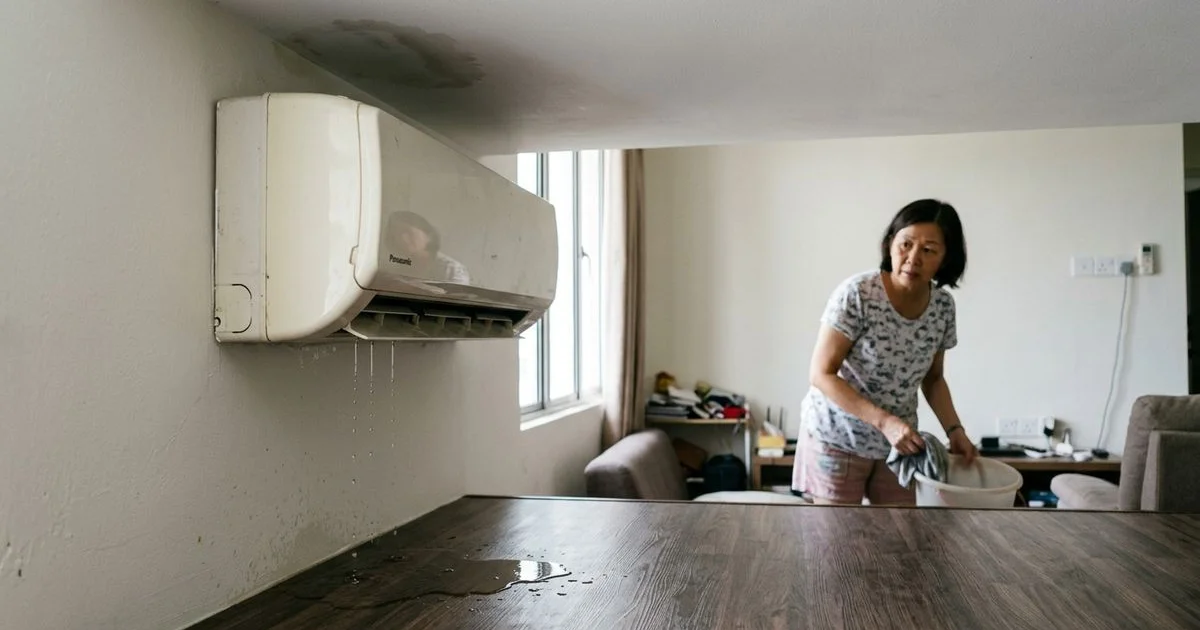
That sudden dripping sound or a fresh puddle under the indoor unit is an instant cause for concern. Our team at AC Service Pro - aircond service Petaling Jaya sees this issue constantly with aging units across Petaling Jaya.
The local humidity levels simply force older systems to work harder. We want to reassure you that 90% of these leaks stem from the same origins.
Most of these issues are straightforward to diagnose. We often see homeowners searching for answers to the exact same question: Aircond Water Leaking? 5 Common Causes and How to Fix Them. Let’s break down the reasons behind the leak and walk through the exact steps needed to resolve it.
Why Does an Aircond Produce Water At All?
Before examining the exact causes, a quick primer on normal operation is helpful. Our technicians often explain that an air conditioner acts as a giant dehumidifier. This cooling process naturally removes heavy moisture from the air. We see this effect amplified in Petaling Jaya, where average daily humidity frequently hits 80%. A standard 1.0HP or 1.5HP unit operating in these tropical conditions can easily produce 1.5 to 2 litres of condensate liquid per hour.
Our initial troubleshooting always starts with the drainage path. This collected moisture needs to flow down from the cold evaporator coil into a plastic drain pan. We rely on a standard 15mm PVC pipe to safely carry this water outside your house. A leak inside the room simply means this specific exit route is compromised.
Factors That Increase Condensation
We always check for these common habits that increase moisture. The condensation volume spikes under these specific conditions.
- Running the unit during heavy thunderstorms.
- Leaving a window slightly open while cooling the room.
- Setting the thermostat below 20 degrees Celsius.
1. Blocked Drain Pan or Drain Line (Most Common - 60% of Cases)
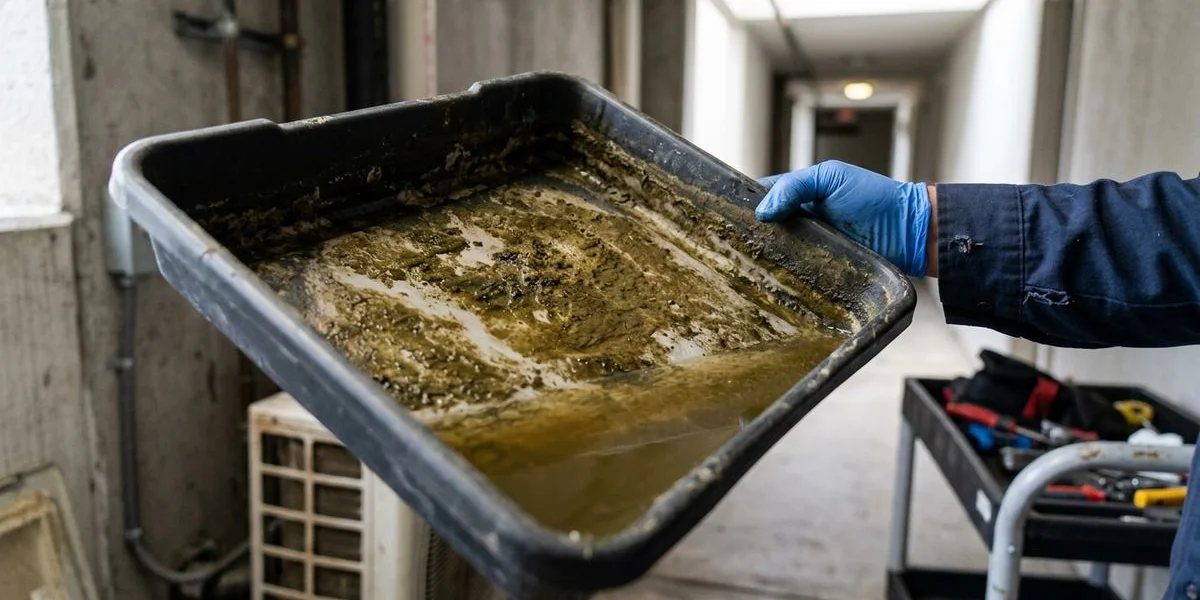
We find that a blocked drain line causes roughly 60% of all indoor water leaks. The drain pan sits directly under the evaporator coil to catch every drop of condensation. Our maintenance logs show that dust, pet dander, and mould spores quickly accumulate in this tray. The constant moisture and dark environment create the perfect breeding ground for algae.
We frequently see algae sludge completely choke the narrow 15mm PVC drain pipe. The water simply backs up and overflows out the front of the indoor unit. Our immediate fix involves a professional flush. A basic clearing might work for a very fresh, mild clog.
| Indicator | Professional Solution |
|---|---|
| Steady dripping from the front or sides of the indoor unit. | High-pressure water or nitrogen flush of the PVC drain line. |
| Water stains forming directly below the unit on the wall. | Complete chemical wash of the evaporator coil and drain pan. |
We strongly recommend a full chemical wash if the unit is overdue for maintenance. This service clears the entire drainage system and strips the biofilm from the coil fins. Our current market data for 2026 shows a standard chemical cleaning in Petaling Jaya costs between RM120 and RM150 per wall unit. The price varies slightly based on the horsepower of the system.
2. Frozen Evaporator Coil
We always warn clients that a frozen evaporator coil is a serious red flag. Low refrigerant levels or severely restricted airflow cause the copper coils to drop below freezing. Our technicians often see thick layers of solid ice forming across the entire front assembly. The drain pan simply cannot handle the sheer volume of water once this massive block of ice begins to melt.
We advise homeowners to turn the system off immediately if they see ice on the outdoor copper pipes. A forced thaw usually takes about two to three hours. Our team then needs to run a full diagnostic on the system. An older unit might be running on outdated R22 or R410A gas, making pressure tests critical.
Warning Signs of a Frozen Coil
- Water drips heavily for short periods, then stops completely.
- The unit blows cool air alternating with warm, room-temperature air.
- Visible white ice forms on the thicker copper pipe at the outdoor condenser.
3. Dirty Air Filter Causing Airflow Restriction
We consider regular filter maintenance to be the foundation of aircond care. A thick blanket of dust stops warm room air from reaching the cold evaporator coil. Our local environment in the Klang Valley, with fluctuating PM2.5 levels, causes these mesh screens to clog much faster than expected. The restricted airflow forces the coil to run much colder than its designed temperature.
We see this lead directly to the same freezing and overflowing issues mentioned earlier. A neglected filter is the easiest problem to prevent. Our official recommendation is to remove and wash these screens every one to three months. A system that has been neglected for over six months usually requires a deep chemical cleaning to restore proper airflow.
Insider Tip: If you hold your washed air filter up to the light and still cannot see clearly through the mesh, the microscopic pores are permanently clogged with grease or fine particulate matter. It is time to buy a replacement filter.
4. Broken or Missing Drain Pump (Cassette and Concealed Units)
We handle water leaks in ceiling cassette and concealed units differently than wall models. These premium systems sit flush in the ceiling and cannot rely on gravity to drain the water. Our installations use a small electric condensate pump to lift the water up into the ceiling’s PVC drainage pipe. The internal tray fills up and spills over the edges when this mechanical pump fails.
We frequently replace worn-out pumps from standard brands like Acson Easi-Flo or Daikin Dewpoint. A failed pump usually presents as a sudden leak from the corners of a false ceiling while the cooling remains strong. Our standard replacement service for these parts ranges from RM150 to RM350, depending on the specific motor capacity required. The diagnostic and swap can easily be completed in a single afternoon.
Common Drain Pump Replacement Costs
- Standard wall unit auxiliary pumps: RM150 to RM200.
- Ceiling cassette built-in pumps (e.g., Acson Easi-Flo): RM250 to RM350.
5. Refrigerant Gas Leak
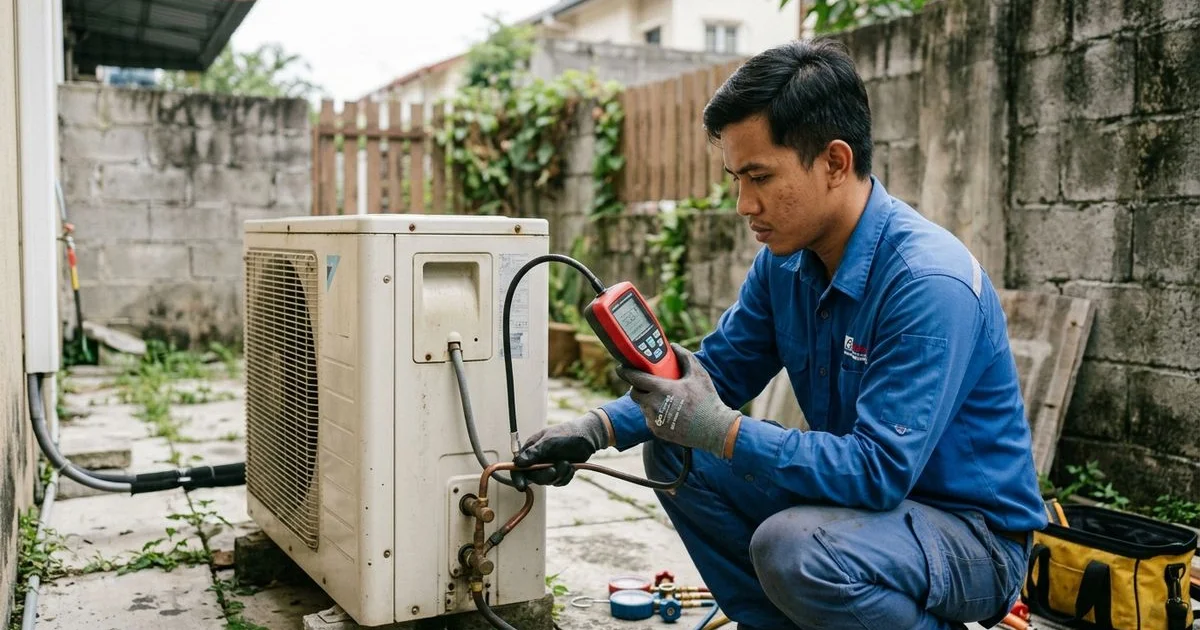
We regularly encounter systems that leak water simply because they are short on refrigerant gas. This low pressure causes the internal coil to freeze over rapidly. Our pressure testing tools help locate the exact point of the leak before we add a single drop of new gas. A simple top-up without a proper repair is a temporary fix that will fail again within weeks.
We find that the newer R32 refrigerant systems operate at different pressures than the older R410A models. The technician must seal the tiny copper pinholes or flared joints correctly. Our repair process ensures the system holds the correct vacuum pressure before recharging the specific gas type required. Proper sealing stops the leak and prevents future water damage.
| Refrigerant Type | Common Usage & Repair Context |
|---|---|
| R32 | Standard in modern units. Highly efficient but requires specific high-pressure gauges for leak testing. |
| R410A / R22 | Found in older aging units. R22 is phased out, making gas top-ups increasingly expensive and impractical. |
Aircond Water Leaking? 5 Common Causes and How to Fix Them: DIY Checks
We always encourage homeowners to run a few basic checks before booking a repair. These simple steps take less than ten minutes to complete. Our goal is to save you the cost of a diagnostic fee for a trivial problem. The table below outlines the exact DIY checklist our dispatchers use over the phone.
| DIY Check Step | What to Look For & Action Required |
|---|---|
| 1. Inspect the air filter | Remove the front cover. If the mesh is clogged with dust, wash it and dry completely. |
| 2. Verify the remote settings | Ensure the mode is set to “Cool”, not “Dry” or “Heat”. |
| 3. Locate the outdoor drain pipe | Check if water is dripping at the outdoor drain outlet. If yes, the drain is flowing; your leak is something else. |
| 4. Listen to the outdoor unit | Ensure the fan is spinning and you hear the compressor humming. |
| 5. Check the unit level | Ensure the indoor unit is mounted level. A slight tilt can cause water to overflow one side. |
We find that completing these five steps resolves many simple issues. If you have done all five and the leak continues, it is time to call a professional.
When to Call a Professional
We urge clients to take immediate action if a leak is near electrical components. Water leaks can damage ceilings, walls and electronics very quickly. Our emergency teams have seen entire plaster ceilings in Petaling Jaya collapse within 48 hours of an ignored leak. The repair bills for structural damage far exceed the cost of an aircond service.
We treat discoloured, rust-coloured water as a sign of severe internal contamination that needs professional dismantling. A leak combined with weak cooling or strange noises also indicates a serious system fault. Our experienced technicians carry the right diagnostic tools to resolve these hazards safely. Professional intervention guarantees the problem is fixed right the first time.
Emergency Warning Signs
- Water dripping onto electrical outlets.
- Water soaking into drywall or plaster.
- A steady drip that does not slow down.
- Brown or rust-coloured water.
- Leak combined with weak cooling or strange noises.
We provide priority dispatch for severe water leaks.
WhatsApp AC Service Pro PJ at 016-636 6769 and we’ll dispatch a senior technician with 10+ years of water-leak repair experience.
Our diagnostic fee is RM50, which is fully waived if you proceed with the repair.
This comprehensive guide on ‘Aircond Water Leaking? 5 Common Causes and How to Fix Them’ was designed to help you identify the exact problem.
We stand by our work with a solid guarantee.
Every fix comes with a 30-day warranty to give you complete peace of mind.