“My aircond keeps running out of gas - can you top it up again?” Our aircond service Petaling Jaya team hears this at least once a week. Here’s the uncomfortable truth: refrigerant doesn’t run out in a healthy aircond. If your unit keeps losing gas, you have a leak somewhere in the sealed system. Keep pumping gas in without fixing the leak, and you’ll be calling us back every few months - with a compressor that’s gradually failing from the stress of running low.
In this guide, we’ll cover the five warning signs of an aircond gas leak, why ignoring them is expensive, and what a proper repair should look like.
Why Gas Leaks Are Serious
Refrigerant (R22, R410A or R32) circulates in a sealed loop between the indoor and outdoor unit. It’s designed to stay inside the system for the unit’s entire 10-15 year lifespan. If gas is escaping, it means a pressure breach somewhere - at a flare connection, a solder joint, a corroded section of copper pipe, or a cracked valve.
Running an aircond with low gas causes three problems:
- Weak cooling - Not enough refrigerant mass to absorb room heat
- Compressor damage - Without liquid refrigerant to carry oil back to the compressor, the compressor runs dry and overheats
- Rising electricity bills - The unit runs longer trying (and failing) to reach the set temperature
- Environmental harm - R22 damages the ozone layer, R410A has high global warming potential
A small leak detected early is usually a 30-minute solder and recharge job. A leak ignored for months can lead to a compressor replacement costing 5-10x more.
Sign 1: Weak or Lukewarm Airflow
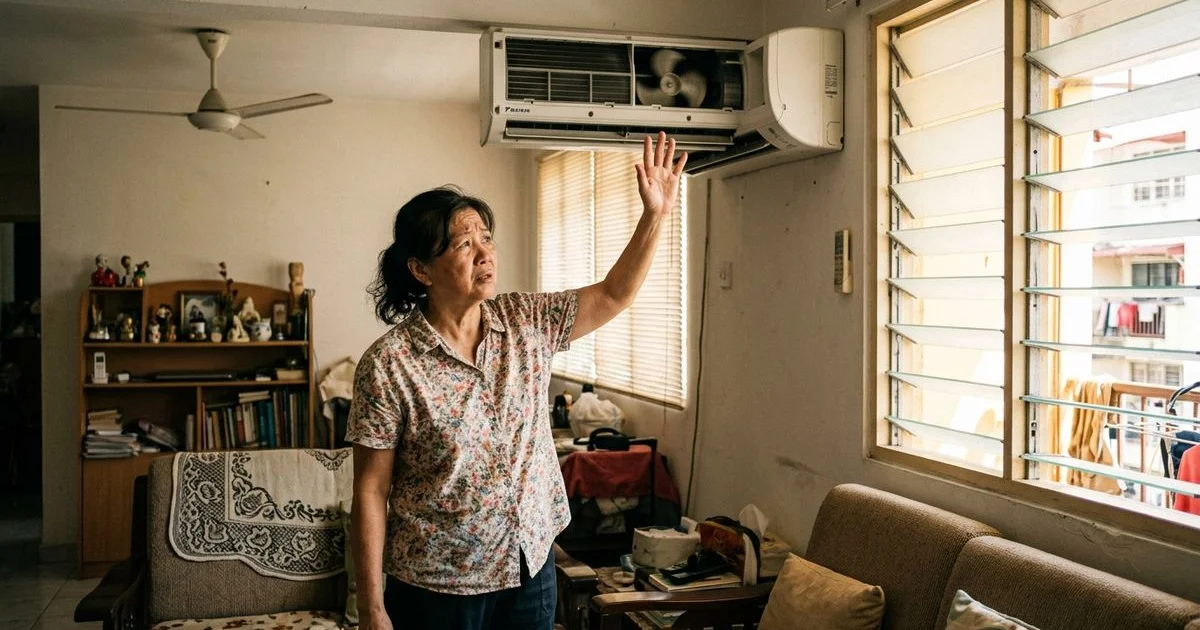
The most common symptom. Your aircond runs normally, the fan blows, but the air coming out of the vents is only mildly cool - never the crisp cold you used to feel. The unit might manage to cool the room eventually, but only after hours of running.
What’s happening: Lower refrigerant pressure means less heat is being transferred out of the room. The evaporator coil isn’t getting as cold as it should.
How to confirm: Hold a thermometer 2-3 inches from the vent outlet. A healthy aircond should deliver air 15-17°C in cool mode on a 30°C day. If yours is only dropping to 22-25°C, you likely have a gas issue.
Sign 2: Ice on the Copper Pipe or Evaporator Coil
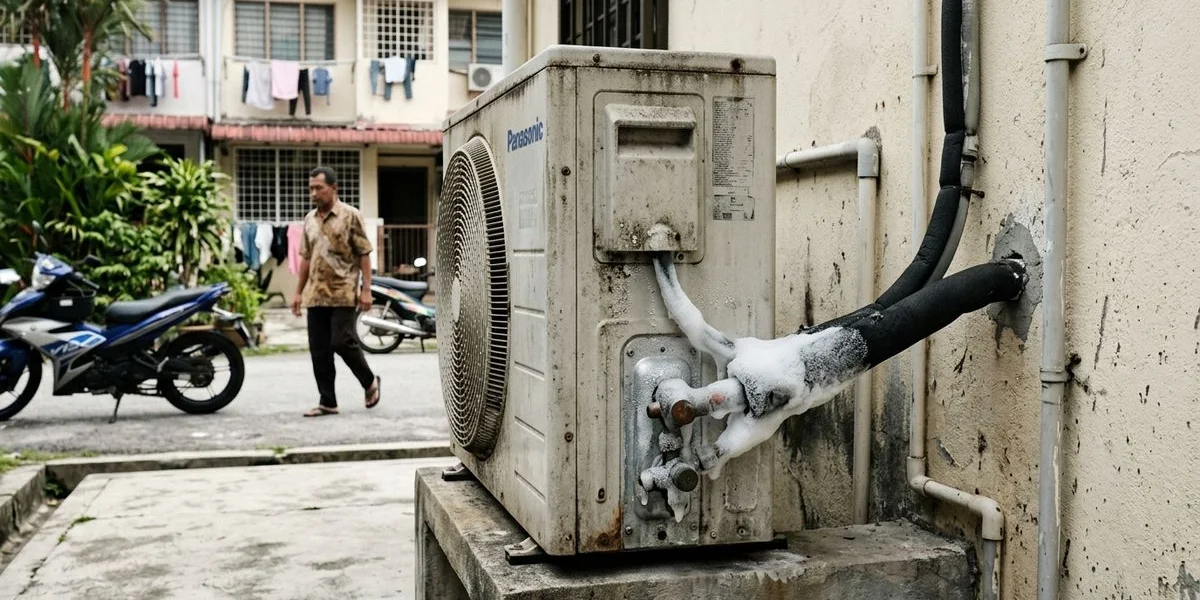
This one looks counter-intuitive - how can a low-gas system be freezing up? Here’s what happens: when refrigerant is low, the evaporator coil runs colder than designed (rather than warmer), because the small amount of refrigerant remaining gets extremely cold before evaporating. Moisture in the air condenses on the coil and freezes solid.
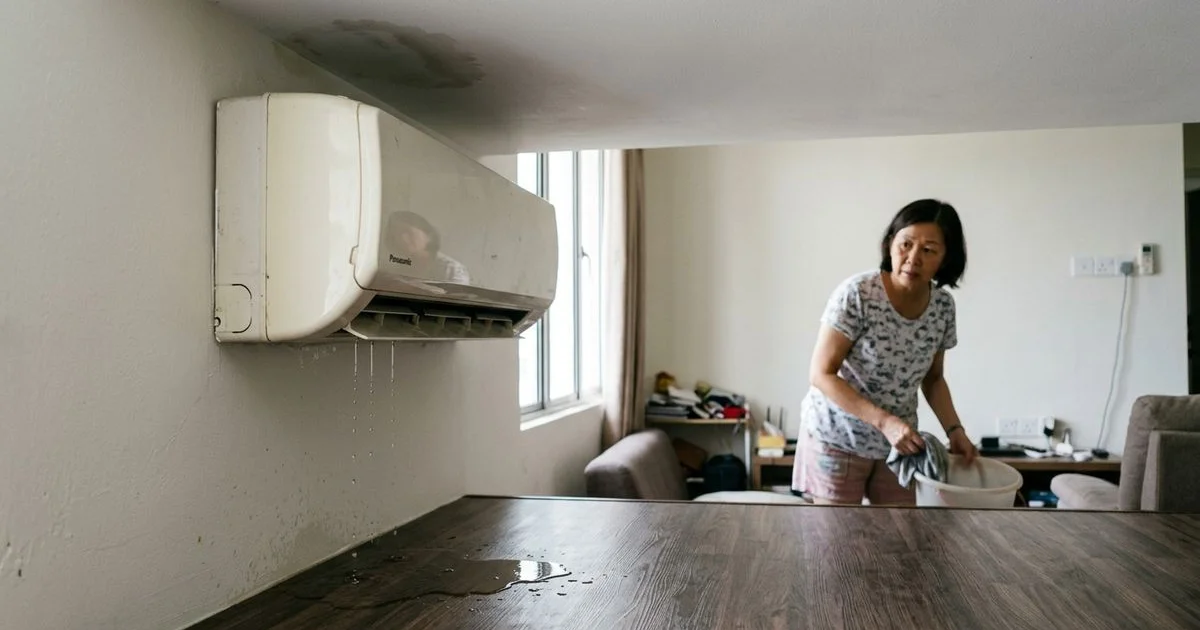
What you see: Ice forming on the copper pipe at the outdoor unit. A white layer of frost on the indoor coil. Sometimes water dripping heavily as the ice thaws.
What to do: Switch the unit off immediately. Let the ice melt naturally for 2-3 hours (don’t try to chip it off - you’ll damage the coil fins). Then call a technician.
Sign 3: Hissing Sound Near the Copper Pipes
What you hear: A soft, continuous hiss - either from the indoor unit near the bottom where the copper pipes enter, or from the outdoor unit near the service valves.
What it means: Refrigerant escaping through a leak point. The hiss is the sound of gas under pressure forcing its way out.
Note: Don’t confuse this with the normal “whooshing” sound of an inverter unit ramping up. Inverter whoosh is intermittent and happens at startup. Leak hiss is continuous and often has a higher-pitched whine to it.
Sign 4: Oily Residue Around Pipes or Connections
Refrigerant circulates with compressor oil. Where gas escapes, oil usually escapes with it - and oil leaves a visible residue that gas doesn’t.
What to look for: Dark or greasy film around the service valves at the outdoor unit. Oil stains on the wall below the indoor unit. Oil spots on the rubber insulation covering the copper pipes.
If you see oil, you have a leak. Period. Even without any other symptoms, an oily residue means gas has been escaping and the leak needs to be repaired.
Sign 5: Higher Electricity Bills
What you notice: Your monthly electricity bill has crept up over the last 2-3 months without any change in usage patterns. The aircond is running longer than usual to reach the set temperature.
What’s happening: A low-gas aircond is inefficient. The compressor runs continuously trying to reach the setpoint, never quite getting there, drawing full power the entire time. An inverter unit that should be cycling down to 30% power is running at 100% instead.
How to confirm: Compare your TNB bill to the same month last year. If usage is up 20-40% without any new appliances or lifestyle changes, and your aircond is the main cooling source, it’s a strong indicator.
What Happens If You Ignore It?
Here’s a cautionary tale from our service log. A customer in Kota Damansara kept topping up gas every 3-4 months instead of fixing the underlying leak. Each top-up was cheap (RM100 for R410A), so it seemed easier than a proper repair. Over 18 months they spent around RM700 on top-ups. At month 20, the compressor failed completely. Replacement cost: RM1,450 plus RM250 labour.
Total cost of ignoring the leak: RM2,400. Cost of a proper leak repair on day one: RM350.
This isn’t an edge case - it’s the most common pattern we see with “keep topping up” customers.
What a Proper Gas Leak Repair Looks Like
When you book a gas top-up with AC Service Pro PJ, here’s exactly what happens:
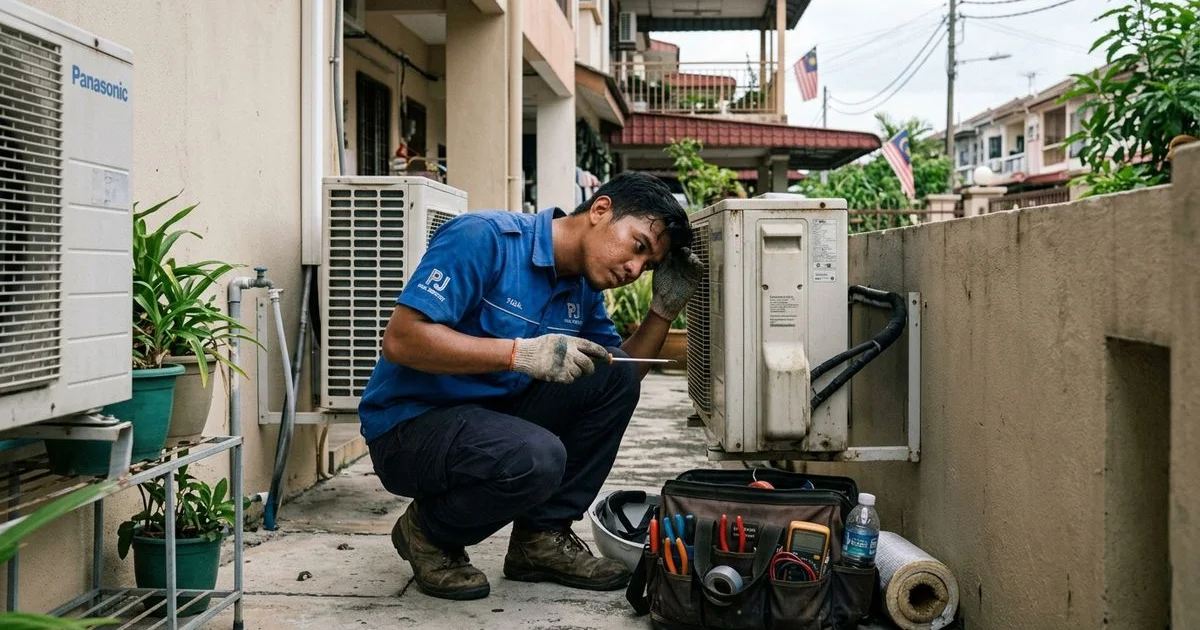
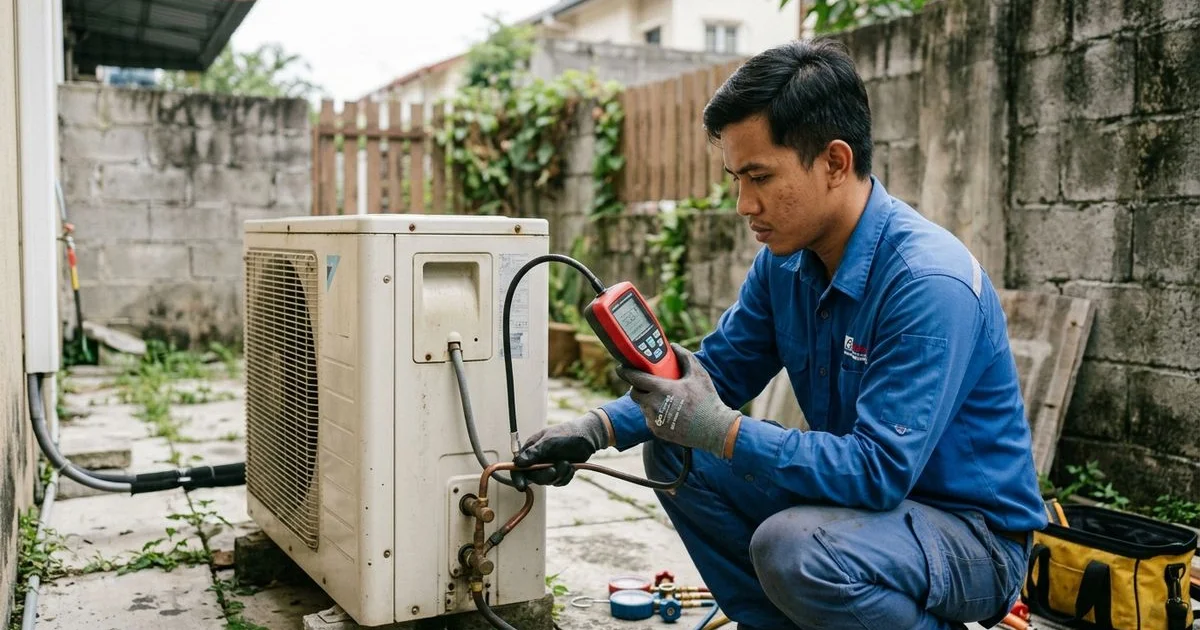
- Pressure test - We attach manifold gauges and read the current refrigerant pressure.
- Visual inspection - Checking for obvious oil stains, corrosion or damaged insulation.
- Electronic leak detection - Using a refrigerant sniffer to pinpoint the leak location.
- Minor leak repair - Soldering flare connections, replacing service valve cores, or re-crimping damaged pipe.
- Vacuum - Pulling a deep vacuum on the system to remove air and moisture.
- Recharge - Adding the exact gas charge per manufacturer spec.
- Retest - Running the unit for 15+ minutes to verify normal pressures and cooling.
If the leak is in an inaccessible location (e.g., buried inside a wall), we’ll flag that clearly and discuss options with you before proceeding.
Book a Leak Repair
If you’ve noticed any of the five signs above, don’t wait for it to get worse. WhatsApp AC Service Pro PJ at 016-636 6769 with your unit details and symptoms. Our senior technicians will dispatch within 24-48 hours, and every repair carries a 30-day workmanship warranty.
Learn more about our gas top-up service or our full aircond repair service.